While securing a job in Dubai is thrilling, it is important to consider factors other than salary when making the decision to accept a job offer. The quality of your health insurance plan, the paid leave you receive, and the accommodation benefits and end-of-service packages can be the difference between great compensation and poor compensation.
When you’re exploring how to get a job in Dubai, it’s important to be aware of what benefits to investigate, as this can help you compare positions and make informed choices about moving to Dubai.
Here’s what you need to know about employee benefits in 2026 for those applying from abroad and those already living in the UAE.
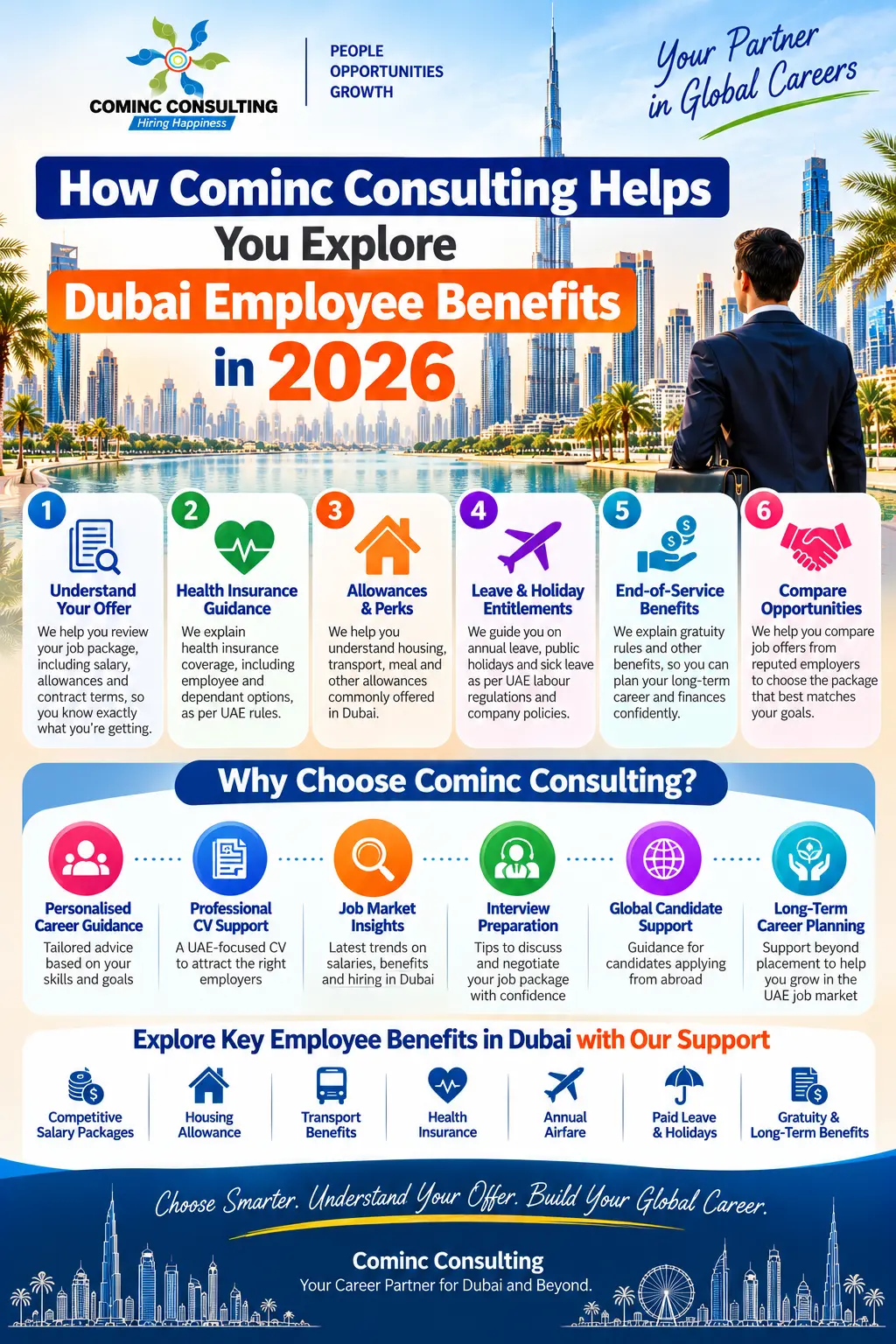
1. Salary and Allowances
First, take a look at the base salary as stated on your written offer and employment contract. Then check for other allowances.
Your package might include:
- • Housing or accommodation allowance
- • Transportation allowance
- • Mobile/communication allowance
- • Subsidized meals
Not all employers provide these benefits. Some companies give a consolidated salary, while others give allowances in addition to salary. Request a written breakdown of your salary and allowances in Dubai before you accept an offer, especially when hiring for jobs in Dubai for foreigners.
2. Health Insurance: Check Out Your Benefits
Health insurance is a big part of your package. Dubai has rules for covering employee health insurance. The rules vary depending on the insurance coverage policy and what rules apply.
When accepting an offer, ask when the cover starts, which hospitals and clinics are covered, whether prescription medicines are included, and whether dental treatment is covered.
If you are considering how to find a job in Dubai from abroad, look into the insurance procedures and the Dubai work visa process prior to moving.
3. Annual Leave, Public Holidays and Sick Leave
Paid leave provides you with an opportunity to recuperate, attend to personal obligations, and see family.
In the UAE, private-sector leave is set out under UAE labour law for job seekers in 2026, which typically includes 30 days of paid annual leave for all workers after a year of service. Typically, employees who have served for more than six months but less than a year should receive 2 days per month of leave. Eligible employees may also be entitled to sick leave and other statutory leave, as applicable.
If you are looking for Dubai jobs for foreign employees, check the company’s leave policy against the minimum legal requirement. Ask how leave is approved, whether leave can be carried over, and how public holidays are handled.
4. End-of-Service Gratuity
For those UAE private-sector employees who are eligible under the standard system, end-of-service gratuity may be a significant benefit.
In general, gratuity will be payable to an eligible foreign employee on the termination of his or her service after he or she has served for one year or more. The standard calculation of gratuity is based on basic salary and length of service, with legal conditions and limitations. Variations may apply to employees of an approved alternative savings scheme.
For people planning job hunting in Dubai for newcomers, understanding this benefit early can help when comparing offers with different salary structures.
5. Housing, Transport and Annual Airfare
Relocation costs can add up quickly, especially if you’re moving from a different country. Find out if your employer provides accommodation, transport, or annual airfare.
Some companies will arrange housing; others will give you a monthly allowance. Annual flight tickets might also be on offer, but eligibility, frequency, and destinations vary from employer to employer.
If you are learning how to get a job in Dubai, work out what you are going to spend on rent, commuting, food, and travel home. And if your cost of living is significantly higher, the higher salary may not be the better offer.
You may not be entitled to all these other perks, so be sure to get the details in writing.
6. Working Hours, Overtime and Weekly Rest
Your contract should make it clear what days you work, the days you take as rest days, and the overtime arrangements.
The normal working hours for most of those working under the standard UAE private-sector labour law are generally eight hours per day or 48 hours per week, with certain exceptions applying.
Inquire if the job requires evening shifts, weekends, and/or regular overtime. If the employer says “flexible hours,” ask them to explain what that entails.
When reviewing jobs in Dubai for foreigners, make sure the working conditions suit your personal commitments as well as your career plans.
7. Compare the Complete Job Package
A bigger salary is not always a better offer. Compare the complete job package, benefits, and likely cost of living.
Use this checklist:
- • Salary and allowances
- • Health insurance and dependent’s coverage
- • Annual leave and holidays
- • Housing, transport, and airfare
- • Organisation of working hours and overtime
- • Notice and probation period
- • End-of-service benefits and contractual conditions
If you are researching how to find a job in Dubai from abroad, make sure to get the offer letter in writing and know the conditions of the offer. It’s also important to get the full picture when you are looking for Dubai jobs for international workers.